In order to prepare for the period of water shortage, and be able to predict these periodst, we should have all data about water wells and a man who cares about the data and interprets it.

The article describes the sources, forms and health risks of lead in water and mainly removal of lead from water using sorption materials CFH 0818, Bayoxide E33 and GEH. The results of laboratory measurement show that all three materials were able to reduce lead concentrations well below the limit of decree no. 252/2004 Sb. Overall, the best results in the removal of lead from the water reaches the sorption material Bayoxide E33. Furthermore, it was shown that the used sorption materials have an effect on the removal of iron and manganese from water.

This study investigated changes in time series of hydrological balance components using trend detection. A various sest of data were available, such as data from the report “Hydrological balance of water quantity and quality in the Czech Republic”, the report of natural sources of groundwater and groundwater regime assessment, in order the potential change of hydrological cycle to be comprehensively observed. Although the time series used are relatively short with length of some 30 or 40 years, the advantage is their similar period and thus possibility of comparison among the series. For trend detection the modified Mann-Kendall test removing lag-1 autocorrelation was used. The magnitude of the trend was described in mean monthly and annual series of precipitation, air temperature, evapotranspiration, stream flow and other variates, as well as in monthly and annual mean and minimum of daily stream flow and baseflow, spring yields and borehole levels.

At present, it is establishing the second edition of the standard ČSN 33 2000-7-753: Low-voltage electrical installations – Part 7-753: Requirements for special installations or locations – Heating cables and embedded heating systems, which already includes other requirements associated with this type of heating, generalized for any use.

At present, it is establishing the second edition of the standard ČSN 33 2000-7-753: Low-voltage electrical installations – Part 7-753: Requirements for special installations or locations – Heating cables and embedded heating systems, which already includes other requirements associated with this type of heating, generalized for any use.

Methods of cost allocation in apartment buildings have undergone significant changes in recent years. The article offers a comprehensive overview of cost allocation methods in multi-dwelling units according to applicable regulations. It is intended mainly for owners of residential units, board members of homeowners associations, managers of housing cooperatives or individuals and companies managing residential buildings.
Cost allocation in apartment buildings is currently governed by two laws: Act No. 67/2013 Coll. and the new Civil Code No. 89/2012 Coll. These laws governed cost allocation in calendar year 2014 and apply also for 2015. The heating and hot water supply costs in MDUs from 2016 onwards will be allocated pursuant to the new decree No. 269/2015 Coll. and the amended Act No. 67/2013 Coll.
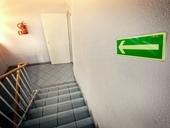
Owners of residential buildings and their tenants must ensure the implementation of some activities on the technical and fire safety devices in order to ensure their safety and functionality in use. Inspections and checks are therefore not just binding on the applicable regulations, but also may prevent damage to health and property.
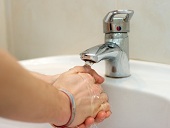
There are two standards for microbiological examination of samples for the presence of Legionella bacteria. Using them we can get valuaes not only to compare, but sometimes also as a signal to the challenging economic adjustments and changes in the system of production and distribution of hot water.

The article reports on the reasons of soil waterlogging, impact of ground water on structures, and on drainage systems and measures to eliminate the waterlogging effects. Furthermore, there is an information about pertinent requirements of statutory regulations and two schematic maps of waterlogging of soil in the Czech Republic are shown.
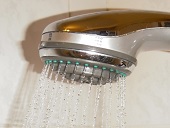
During a recent revision of CSN 75 5455 were in the process of determining the calculation of flow made only minor changes. The reason was the lack of measured flow. Therefore, at appropriate occasions perform additional measurements. For these measurements is determined also water consumption and its distribution throughout the day.